We all need a little Mozart
We all need a little Mozart!
This music will leave you breathless.
Light and Dark, Day and Night – these amazing works will wow you. Featuring Romanian composer George Enescu’s “Dixtuor á Vents” and Mozart’s “Serenade in C Minor, K.388”. The music will leave you breathless!
The Dixtuor or Decet in D Major, Opus 14, was written in 1906 and performed in Paris the same year. The piece was originally scored for a double wind quintet: two flutes, oboe, cor anglais (English Horn) in place of second oboe and two clarinets. It has been described as a sensationally orchestrated piece of chamber work. Seen as a light and entertaining composition, typical of wind serenades of the Classical era, with a touch of the Romantic period as well. “This is a new piece to me, but I’ve been enjoying its’ innocence. When it was composed in 1906, I’m not sure if it seemed nostalgic then, but when I hear it now, I feel like there are no worries – it is Iike the last two years haven’t happened” said VIS clarinetist, Krystal Morrison. The Dixtuor is also a new piece of music to VIS oboist Geronimo (Nimo) Mendoza. “I am really looking forward to exploring this very interesting music. What I have found so far, is that the music promises to keep that Romanian spirit present in all Enescu’s works. It is really poetic and rhapsodic, with really beautiful melodies and colourful harmonies”.
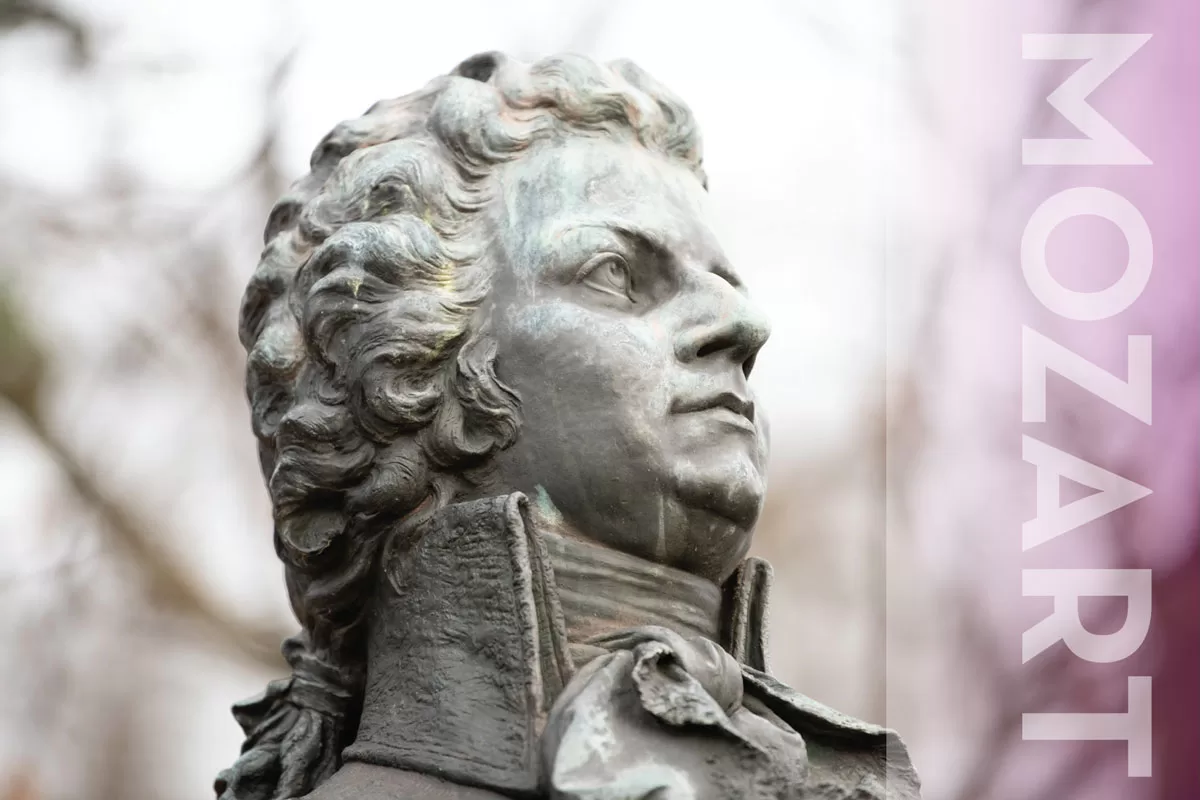
Serenade in C minor, K.388 was written in 1782 – although when it was actually premiered, and who it was written for, are all unknown. Wind music was very popular at the time, known as the period of Harmoniemusik (1760-1837) in Vienna and Prague, and was used for light and lively entertainment at parties. It has stumped scholars of Mozart as to why this piece has dark tones and apparently a very serious purpose. It is definitely one of Mozart’s most puzzling and mysterious works. It was most likely not played often in Mozart’s day. Ironically, despite the sombre demeanour throughout, the Serenade ends in a triumphant key of C Major. Krystal explains her love of this creation. “It feels like eight friends, or even four couples got together for brunch and are having this great conversation. It starts off so serious, but the energy throughout is just something that you get swept up in and the characters take turns interacting with each other. There are moments where they’re all boisterously yelling in agreement across the table. It’s such great fun to be a part of!” Nimo agrees, “the Mozart Serenade is a true masterpiece of music for the winds, and I have had the chance to perform it a few times before. It is majestic but yet comical at times by giving that humorous signature present in almost all Mozart’s music.”
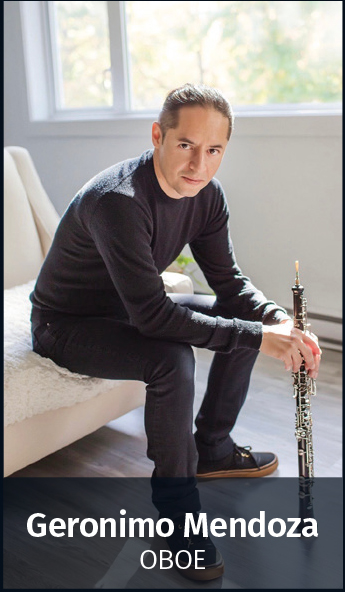
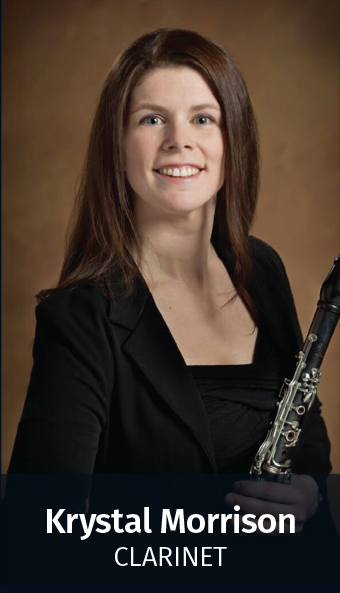 Because this concert focuses only on wind instruments, we were curious and asked both Krystal and Geronimo what motivated them to choose their particular instruments when there are so many featured in an orchestra. Krystal recounted her days in high school band class: “I wanted to play an instrument that no one else played and there were already a million clarinetists! But I found this old book in the library that talked about EVERY instrument, and in it was an entire page on the alto clarinet. An alto clarinet is like a clarinet, just bigger. It’s sometimes used in band music and has a very haunting sound. It also has a reputation of being a very nerdy instrument. It’s like the viola of the woodwinds. There are so many jokes about it (but I didn’t know this at the time I chose it!). So, I asked my band teacher if I could play this, and he was very happy for my choice because it adds a really nice middle voice. But over the years I realized if I wanted to do any really fun music, let alone play in an orchestra, I’d have to switch over to clarinet!” she explained with a laugh. Nimo tells how his choice was made for him: “I have to confess that I didn’t know anything about the oboe when my parents took me to the youth orchestra of my neighbourhood. I was eleven years old then and wanted to play the flute, but when I approached the conductor to request for a flute, he told me that all the flutes were already given away. Besides, he added, you don’t look like a flute player at all! You look more like an oboe player and handed me a shiny brand-new oboe, a reed, a finger chart and a few scores. The week after I was enjoying myself playing at the orchestra and I soon fell in love with the sound and the expressiveness of my oboe, and I also loved that almost every piece I played had an oboe solo.”
All our VIS musicians are so happy to be playing for a live audience again. Both Krystal and Nimo agreed that they were very grateful to have been in a country that supported its artists throughout the pandemic. “During this difficult time, we had to learn new ways to stay connected with the listeners, our students and colleagues”, explained Nimo. Krystal had a lot of students to teach and had to move all lessons online. A big learning curve for sure. “We were forced to abandon what we loved doing the most – getting together and performing for our beloved audiences” said Nimo. “As a performing artist, there’s nothing I miss more than being onstage with my colleagues making music. That is something I have done since I was eleven years old, and it’s been an important part of me”.
Krystal says she cannot wait to see her fellow musicians and perform for the wonderful audience that has continued to supported them. “I’m so looking forward to it! Both on stage, and after rehearsals, to catch up on the last two years.” Nimo chimes in to that sentiment. “It is a moment I have long waited for. After all, my fellow VIS musicians are like an extended family to me”. Both Krystal and Nimo, together with their fellow musicians, are ready to make beautiful music. “I promise you all that this concert will feel like a warm family reunion after a very long absence” beams Nimo.
There will certainly be joy in the air at this performance – a family reunion indeed! It would not be a surprise to see this octet catching up and lingering over a beer at White Sails. “Just like the good old days!” says Krystal with a smile.
Join the reunion and let the music surround you.
Article written by Christine McAuley