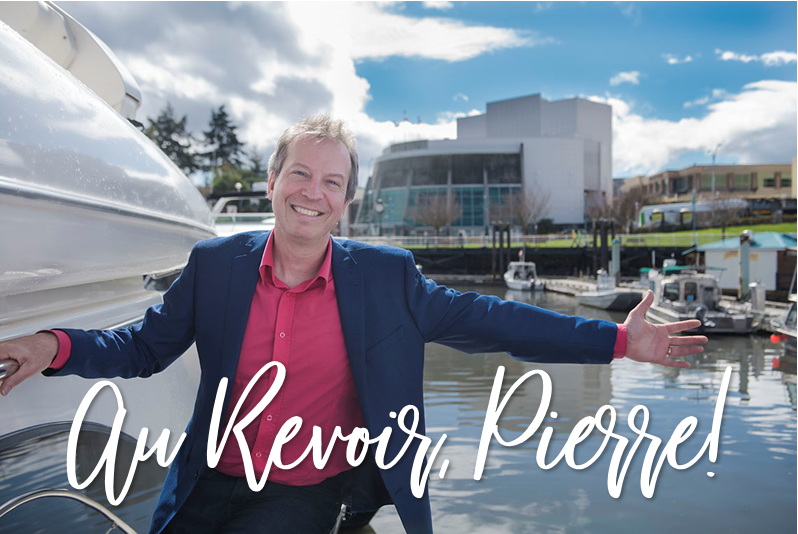
Maestro Pierre Simard’s Farewell Concert

Maestro Pierre Simard’s Farewell Concert
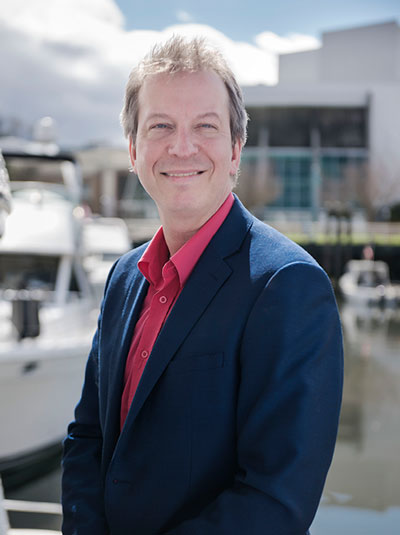
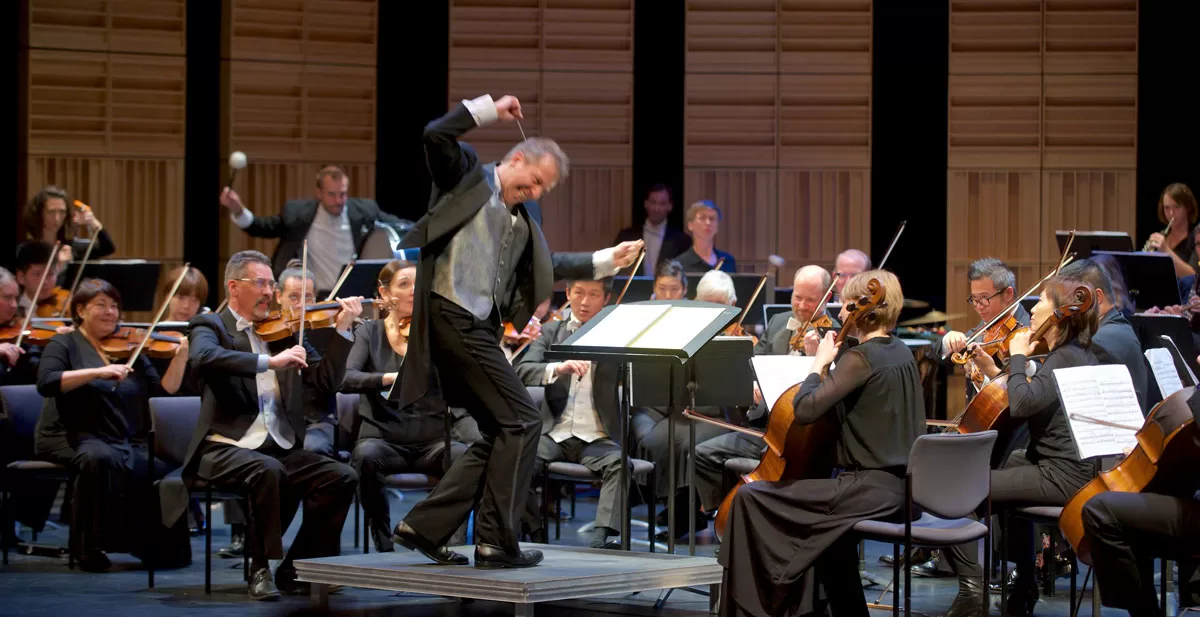
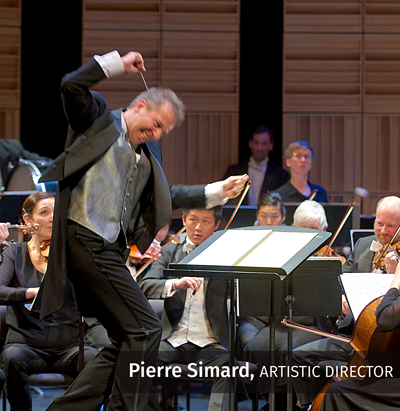
When the Vancouver Island Symphony went dark in March 2020, no one could anticipate what would happen over the next 22 months. “This day, we will come back on stage all together.  We will pick up at the exact same point we left off.” Pierre Simard, Artistic Director of the VIS explains: “This piece will be very symbolic for us as we join together again for the for the first time in almost 2 years.”

NOTE: This concert did not happen in January 2022 as planned due to the pandemic and was postponed until June 24.

Beethoven’s Eroica is one of the most important symphonic works in musical history. The form of this piece started the transition towards Romanticism; it signified the end of the Classical era, which was witness to the musical development of this future “musical lion”. Until then, his music had been written using most of the devices of Mozart and Haydn’s musical languages. “Eroica was such a revolutionary piece,” explains Pierre. “The first movement is the length of a full Haydn symphony! This was unheard of… This movement lasts around 20 minutes, and the language is pure Beethoven”.

“Why did we choose this piece?” Pierre asks, “We are re-emerging from our Covid-19 world and we are still here, still making music. This piece means Heroic and that is how we feel as an orchestra. It is all about resilience. The shutdown of live music and theatre was so discouraging… We could have disbanded and called it a night, but here we are. We will have most of our same group of musicians performing on stage as we did in 2020”.

The second movement in Eroica is a funeral march – which is fitting as we remember all those lost to Covid-19. “Many of us had personal losses or were ill ourselves. We were all touched in some way, near or far, many lost so much.” The last movement is an explosion of joy – ending in a celebration. “We need to celebrate and be happy and get lost in the music,” said Pierre. “It is time to let our light shine again. And this concert is dedicated to the First Responders in our community.”

This special concert will also feature a world premiere piece written by Canadian composer Katerina Gimon. “Playing into Silence” is the first of a three-year project between three BC composers, and Tina Biello, Nanaimo’s Poet Laureate (2017-2020) and performed by guest artist, Dory Hayley. “Katerina has caught the spirit of Tina’s poems,” Pierre explains, “it is a modern, contemporary piece that the audience will enjoy. “One of the poems is called Better Days – how appropriate is that?” chuckles Simard.

Join the Vancouver Island Symphony and Pierre Simard on Friday June 24 at either 5:00 or 7:30 p.m. at The Port Theatre and Saturday January 25 at 2:00 p.m. at the Sid Williams Theatre in Courtenay.

Article written by Christine McAuley
Photo by Heydemann Photography
Schubert’s Great Symphony – Glorious & Majestic!

Schubert’s Great Symphony – Glorious & Majestic!

Schubert’s Great Symphony – Glorious and Majestic

just like our fabulous Vancouver Island Symphony!

The C Major 9th Symphony is a favourite of musicians and audiences alike. Join us for this thrilling performance and welcome back all our players, together once again on the Port Theatre stage on Saturday April 30 at 5 p.m. or 7:30 p.m.

Franz Peter Schubert was an Austrian composer of the late Classical and early Romantic eras. Despite his short life, Schubert was amazingly creative, writing over 1,500 works. The largest number of his compositions (around 630) are songs for solo voice and piano. He completed eight orchestral overtures and seven complete symphonies; Schubert is ranked among the greatest composers in the history of Western music.

During his lifetime, appreciation of Schubert’s music was limited to a relatively small group of admirers in Vienna, but popularity of his work increased greatly in the decades following his death. He died at the age of 31, the official cause being attributed to typhoid fever, but believed by some historians to be syphilis.

Schubert scholars believe that his Ninth symphony was largely written in 1825–1826 and was then revised for performance in 1828. The orchestra of the Gesellschaft reportedly read through the symphony at a rehearsal, but never scheduled a public performance of it. The reasons continue to be unknown, although the difficulty of the symphony is the possible explanation. “I have wanted to program this piece into our repertoire for many years,” explains Pierre Simard, Artistic Director of the Vancouver Island Symphony.  “But it is such a difficult piece to fit into a regular two-part symphony performance – it is a full hour long! It bears a question of timing and repertoire balance, as it becomes difficult to squeeze a soloist in… Our current format of one-hour shows was the perfect occasion to celebrate this amazing creation!”

The Symphony No. 9 in C major is known as the Great, originally called so to distinguish it from his Symphony No. 6, the Little C major. Unusually long for a symphony of its time, a typical performance lasts an hour when all repeats indicated in the score are taken. The symphony was not professionally performed until a decade after Schubert’s death. Orchestras of the day found it to be very difficult because of its lengthy woodwind and string parts. When Mendelssohn took the symphony to Paris in 1842 and London in 1844, orchestras apparently flatly refused to play it; in London, the violinists are reputed to have collapsed in laughter when rehearsing the second subject of the finale. “It is true!” laughs Simard – the length was unheard of! But from a modern musician’s perspective, it is a fabulous piece to play. To play only this one piece allows one to be fully immersed and devoted to this piece, giving it their all. They do not have to change direction mid-concert – it is all Schubert.”

Pierre talks of a time when he was in his Masters’ program at university. “Schubert’s Great Symphony was one of my professor’s favourite pieces. This fellow was not one to be messed with – he was 76 years old, with something of a Prussian General style. Very stern! We students had to learn 30-40 scores during the year-long program.  And when it came to Schubert – we had better know our stuff! Terrified as I was, I conducted the Great successfully, and earned a nod from the Maestro. Whenever I conduct this piece, which I have only had the pleasure of performing twice before, I am conducting under that watchful, heavenly gaze of my professor.”

“Schubert’s symphonies are all about melody and harmony – not orchestration. They transcend expectations despite what might be seen as imperfections. My professor had a special description for the last movement: for him, the melody evoked the image of a radiant, godlike child in golden light”. No debate, there is nothing so satisfying than indulging in music. This is an hour of magic, which you are invited to share with us!

Come and be a part of the magic. Share in the joy with the players and each other.

Article written by Christine McAuley
Photo by Heydemann Photography
PERFORMANCE TICKETS:
April 30, 2022, 5:00pm & 7:30pm at the Port Theatre

SCHUBERT’S GREAT SYMPHONY PERFORMANCE DETAILS

Music • Art •  Community

Music • Art • Community

Music • Art • Community
Come be a part of it all!

Pictures at an Exhibition celebrates a brand new commissioned and production of Mussorgsky’s suite by Jason Nett. This wonderful piece encompasses the mission of the Vancouver Island Symphony: a one-of-a-kind immersive experience, showcasing our musicians, visual artists, and our community.
Pictures is a musical work in 10 movements, by Russian composer Modest Mussorgsky. Each one of the movements represents a drawing or artwork. Originally composed in 1874 for solo piano, this composition became better known in orchestral form, particularly as arranged by French composer Maurice Ravel in 1922.

Mussorgsky composed Pictures as a memorial to his friend, the Russian artist Viktor Hartmann, who died in 1873 at age 39. Shortly after Hartmann’s death, Mussorgsky visited a retrospective exhibit of Hartmann’s works: his sketches, stage designs, and architectural studies. Mussorgsky wanted to capture the experience in music. At the time Mussorgsky’s death in 1881, the piece had not been performed nor published. It was his friend Nikolay Rimsky-Korsakov who cleaned up the manuscript and brought it to print in 1886. “It’s important to note the fact that Mussorgsky originally wrote Pictures for piano,” explains Mark Beaty, Principal Double Bass, VIS. “Jason Nett worked exclusively from Mussorgsky’s original piano part to create this version for 12 instruments. It was a challenging request from us at the VIS because it is not a “typical” ensemble he was asked to write for. Our goal was to use this creation not only for our April concerts, but also for our education shows to have a small ensemble that highlighted as many of the instruments of the orchestra as possible, while still being nimble enough to take on tour.”

“The performance of Pictures in April is both an end and a beginning” Beaty continues. “It is the culmination of an 18-month project that we developed during the early days of the pandemic to address the fact that we couldn’t perform for our regular audience in the same way, and we couldn’t visit our grade 4 students or have them come visit us at the Port Theatre as we had done previously for our Education Concerts. The project entailed commissioning a new arrangement of “Pictures,” working with Opus 59 Films to capture a beautiful performance on film, creating 12 filmed educational interviews with musicians from Pictures, and finally a live production of the piece.”

Mussorgsky certainly was a controversial character, raising the age-old question – can you separate the art from the artist? “I acknowledge both the troubling aspects of his life as well as the beauty and magnificence of his art,” Beaty reflects. “What I love about Pictures is that the music itself is the product of Mussorgsky being inspired by another artist, Victor Hartmann, and now we have artists 150 years later that are creating both visual arts, film, and musical performance as inspired by Mussorgsky’s work. This is the beautiful cycle of inspiration given to us by art and music.”

And what about the artwork to inspire our modern-day concert? The VIS had 115 submissions from children and adults hoping to have their art chosen as one of the “10” for the performance. The majority were acrylic works; the next most popular medium was digital photography. The selected pieces will be on display at the Nanaimo North VIRL branch from April 1- 21, 2022 and in the Modern Café during the run. They will also be projected on stage during the concert.

Mark speaks for many of the VIS musicians when he talks about returning to the Port Theatre stage. “To be honest, it is both wonderful and challenging. Playing with masks is surprisingly awkward, and I’ve realized that all the social connections backstage and outside the hall that we used to have are also a part of making the music happen together on stage. The connection between having played a piece really well, and the instant reaction from an audience that acknowledges that everyone in the room has been changed -even momentarily- by what they experienced together is so powerful. I would say that most musicians are ecstatic to be back on stage, but also trying to figure out how to get comfortable again.”

Mark shared that his music career started on cello. He was fortunate to have some private lessons at an early age, but a lot of his development and opportunities to progress came from excellent teachers in the Vancouver Public School system. “I switched to bass when I was 16, went to UVic, then UBC, and got to do an incredible year of study at the National Arts University in Havana, Cuba! My non-orchestral passion is definitely playing Cuban salsa.” Mark says with a smile.

Pictures at an Exhibition is also just the beginning for the VIS. They will be taking the April show and developing it further into a touring education show that they hope to perform for grade 4 students up and down the island. Students next fall will hear a slightly different performance that allows them a bit more time to get “inside” the music and get to know each instrument and each musician a little better.

Music • Art • Community – come and be a part of it all!

Article written by Christine McAuley
Photo of Mark by Heydemann Photography

PERFORMANCE TICKETS:
April 23, 2022, 5:00pm & 7:30pm at the Port Theatre

THE PICTURES PROJECT INFORMATION

We all need a little Mozart

We all need a little Mozart

We all need a little Mozart!
This music will leave you breathless.

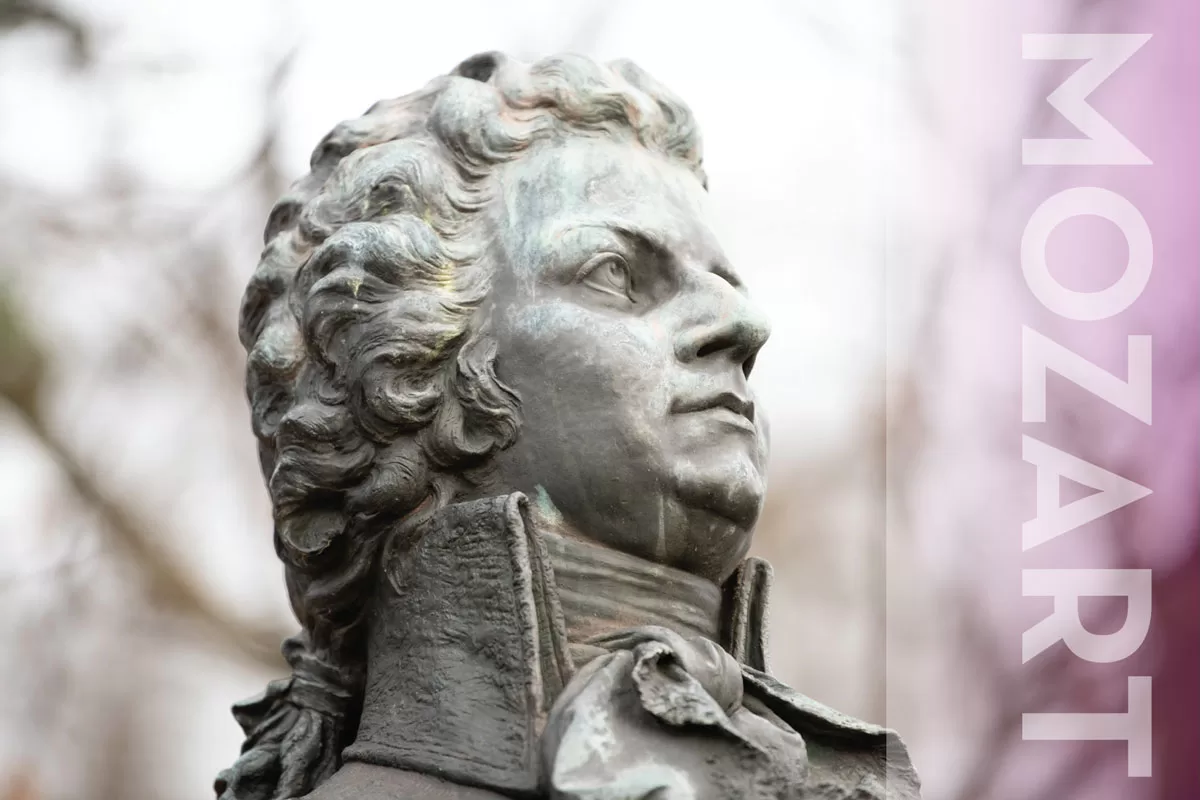
Light and Dark, Day and Night – these amazing works will wow you. Featuring Romanian composer George Enescu’s “Dixtuor á Vents” and Mozart’s “Serenade in C Minor, K.388”.  The music will leave you breathless!

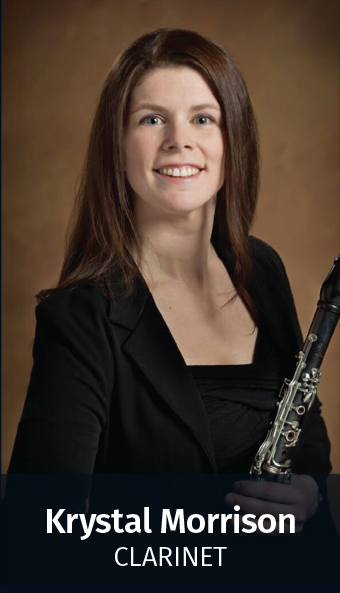
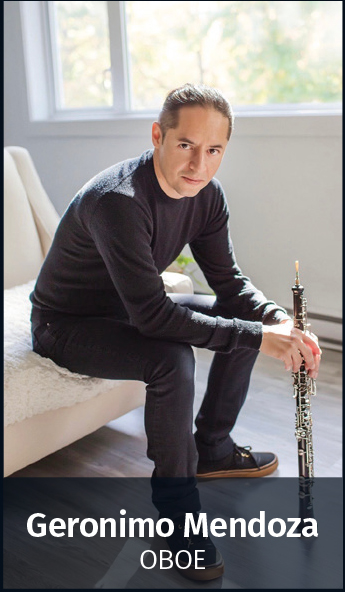
The Dixtuor or Decet in D Major, Opus 14, was written in 1906 and performed in Paris the same year. The piece was originally scored for a double wind quintet: two flutes, oboe, cor anglais (English Horn) in place of second oboe and two clarinets. It has been described as a sensationally orchestrated piece of chamber work. Seen as a light and entertaining composition, typical of wind serenades of the Classical era, with a touch of the Romantic period as well.  “This is a new piece to me, but I’ve been enjoying its’ innocence. When it was composed in 1906, I’m not sure if it seemed nostalgic then, but when I hear it now, I feel like there are no worries – it is Iike the last two years haven’t happened” said VIS clarinetist, Krystal Morrison. The Dixtuor is also a new piece of music to VIS oboist Geronimo (Nimo) Mendoza. “I am really looking forward to exploring this very interesting music. What I have found so far, is that the music promises to keep that Romanian spirit present in all Enescu’s works. It is really poetic and rhapsodic, with really beautiful melodies and colourful harmonies”.

Serenade in C minor, K.388 was written in 1782 – although when it was actually premiered, and who it was written for, are all unknown. Wind music was very popular at the time, known as the period of Harmoniemusik (1760-1837) in Vienna and Prague, and was used for light and lively entertainment at parties.  It has stumped scholars of Mozart as to why this piece has dark tones and apparently a very serious purpose. It is definitely one of Mozart’s most puzzling and mysterious works. It was most likely not played often in Mozart’s day. Ironically, despite the sombre demeanour throughout, the Serenade ends in a triumphant key of C Major. Krystal explains her love of this creation. “It feels like eight friends, or even four couples got together for brunch and are having this great conversation. It starts off so serious, but the energy throughout is just something that you get swept up in and the characters take turns interacting with each other. There are moments where they’re all boisterously yelling in agreement across the table. It’s such great fun to be a part of!” Nimo agrees, “the Mozart Serenade is a true masterpiece of music for the winds, and I have had the chance to perform it a few times before. It is majestic but yet comical at times by giving that humorous signature present in almost all Mozart’s music.”

Because this concert focuses only on wind instruments, we were curious and asked both Krystal and Geronimo what motivated them to choose their particular instruments when there are so many featured in an orchestra. Krystal recounted her days in high school band class: “I wanted to play an instrument that no one else played and there were already a million clarinetists! But I found this old book in the library that talked about EVERY instrument, and in it was an entire page on the alto clarinet. An alto clarinet is like a clarinet, just bigger. It’s sometimes used in band music and has a very haunting sound. It also has a reputation of being a very nerdy instrument. It’s like the viola of the woodwinds. There are so many jokes about it (but I didn’t know this at the time I chose it!). So, I asked my band teacher if I could play this, and he was very happy for my choice because it adds a really nice middle voice. But over the years I realized if I wanted to do any really fun music, let alone play in an orchestra, I’d have to switch over to clarinet!” she explained with a laugh. Nimo tells how his choice was made for him: “I have to confess that I didn’t know anything about the oboe when my parents took me to the youth orchestra of my neighbourhood. I was eleven years old then and wanted to play the flute, but when I approached the conductor to request for a flute, he told me that all the flutes were already given away. Besides, he added, you don’t look like a flute player at all! You look more like an oboe player and handed me a shiny brand-new oboe, a reed, a finger chart and a few scores. The week after I was enjoying myself playing at the orchestra and I soon fell in love with the sound and the expressiveness of my oboe, and I also loved that almost every piece I played had an oboe solo.”
All our VIS musicians are so happy to be playing for a live audience again. Both Krystal and Nimo agreed that they were very grateful to have been in a country that supported its artists throughout the pandemic.  “During this difficult time, we had to learn new ways to stay connected with the listeners, our students and colleagues”, explained Nimo. Krystal had a lot of students to teach and had to move all lessons online. A big learning curve for sure. “We were forced to abandon what we loved doing the most – getting together and performing for our beloved audiences” said Nimo. “As a performing artist, there’s nothing I miss more than being onstage with my colleagues making music. That is something I have done since I was eleven years old, and it’s been an important part of me”.

Krystal says she cannot wait to see her fellow musicians and perform for the wonderful audience that has continued to supported them. “I’m so looking forward to it! Both on stage, and after rehearsals, to catch up on the last two years.” Nimo chimes in to that sentiment. “It is a moment I have long waited for. After all, my fellow VIS musicians are like an extended family to me”. Both Krystal and Nimo, together with their fellow musicians, are ready to make beautiful music. “I promise you all that this concert will feel like a warm family reunion after a very long absence” beams Nimo.

There will certainly be joy in the air at this performance – a family reunion indeed! It would not be a surprise to see this octet catching up and lingering over a beer at White Sails. “Just like the good old days!” says Krystal with a smile.

Join the reunion and let the music surround you.

Article written by Christine McAuley

Tonight… Piaf

Tonight… Piaf

Tonight… Piaf an Interview with Joëlle Rabu

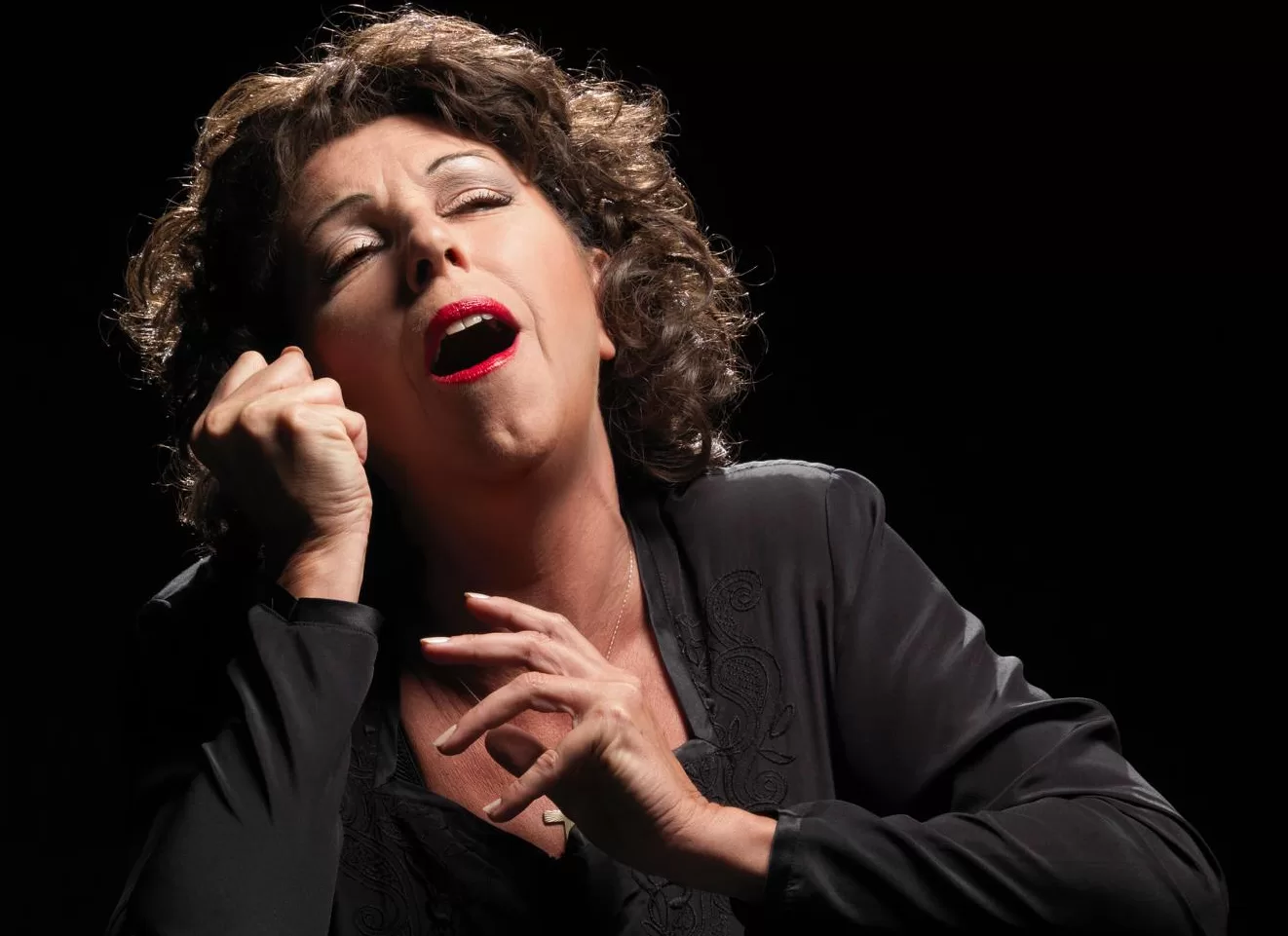
The Vancouver Island Symphony is thrilled to present this moving, compelling tribute to one of France’s most famous songstresses, performed by the vibrant actor Joëlle Rabu.

Edith Piaf (Edith Giovanna Gassion 1915-1963) was an international star – it was her interpretation of the chanson or French ballad that gained her worldwide success. Her songs about love and loss, sung in her unique, earthy, torchy-raw voice, moved audiences. Those songs seemed to reflect her own personal struggles. She lived a hard, short life: Edith was abandoned at birth and brought up in her grandmother’s brothel; reportedly became blind at age 3 from Keratitis, a form of ulcer in the cornea (gained her sight back 4 years later); travelled with her circus acrobat father and tragically lost her only child to meningitis. She scratched out a meagre living as a street performer until she was discovered by a cabaret owner who gave her her first nightclub job as well as the nickname “la môme piaf” which means kid sparrow. Edith was a tiny woman, under 5 feet tall. She later adopted the name professionally. It was not until 1935 that she made her first theatrical debut and within a few years was singing in the large music halls of Paris.

“Tonight…Piaf” is a play with music; it is a story about a moment in her life, her final concert in New York in 1961. It’s about finding truth. I don’t try to imitate Edith Piaf, I don’t look like her or sound like her, it’s simply an honour to sing her songs. I was raised on her music, French is my first language, so she is a part of my upbringing, of who I am.” describes Joëlle.

Joëlle Rabu and the late Ted Galay wrote this moving piece in 1989. They had both seen several theatrical presentations of Piaf’s life but wondered why she sang the way she did – it seemed that question was never answered. The wanted to offer a new generation the chance to look deeply into the heart and soul of this world famous songstress.

It has been 32 years since Tonight…Piaf was created. “The show was written while I was pregnant with my son, Nico in 1989. Touring had slowed down, and I told my stage director, the late Ray Michal, that I wanted to do another play about Piaf, but I wanted a more frank, candid, and accurate account of her life, explaining why she sang the way she did. Ray agreed to help with the concept. At the 5-month mark of my pregnancy, we premiered “Tonight…Piaf” at the Queen Elizabeth Theatre in Vancouver. The little black dress was getting tight, we closed the show in the nick of time!” Recounts Rabu. “My son Nico was born months later, having heard me sing the Piaf songs long before setting foot into this world. Fast forward to 2014, when I was asked to consider remounting the show with the VIS the following year, Nico was now an accomplished musician. He was handed the arranging torch from my long-time music director J. Douglas Dodd and set forth on the year-long journey of arranging the entire “Tonight…Piaf” show for full symphony. When he set foot on the Port stage at the première, as the show’s character- pianist Jean Gerard, he was 25 years old. That was the 25th anniversary of the show. Today, I get the same thrill of performing this play as I did 32 years ago. Knowing my son’s nuances are now in the music, flowing through the instruments of many; feeling his presence on stage as he accompanies my every breath; and being given the honour to indulge in 2 hours of an audience’s attention once again is indescribable. I am grateful for the continued strength of my voice, the support of the audiences, and the sacred trust of the musicians.” Joëlle explained. “In fact, I am honoured that audiences believe I can pull off an iconic Piaf song with honesty and integrity. I never tire of singing Piaf songs. I’ve always said, I will probably sing these wonderful, earthy, lyric-driven chansons well into my 80’s, if I make it that long!”

Joëlle is beyond excited to be performing with the VIS again, for this, her 700 (give or take a few!) performance of this iconic show. But most of all, she says she is honoured. “My relationship with the VIS over the years has always been a fun one. I’ve enjoyed helping in fundraisers, volunteering, and just enjoying the general camaraderie, discipline and dedication of symphony musicians. The VIS has not only been a special part of my life, but has been an important community educator in my son’s musical growth.”

Come join us and be inspired by this magical night of storytelling and music. Rediscover your Joie de vivre!

Article written by Christine McAuley