Meet the Conductor – Herb Smith

Meet the Conductor – Herb Smith

Our Family & Friends Christmas with fraser+KEL

Q. What place were you born and where do you live now?
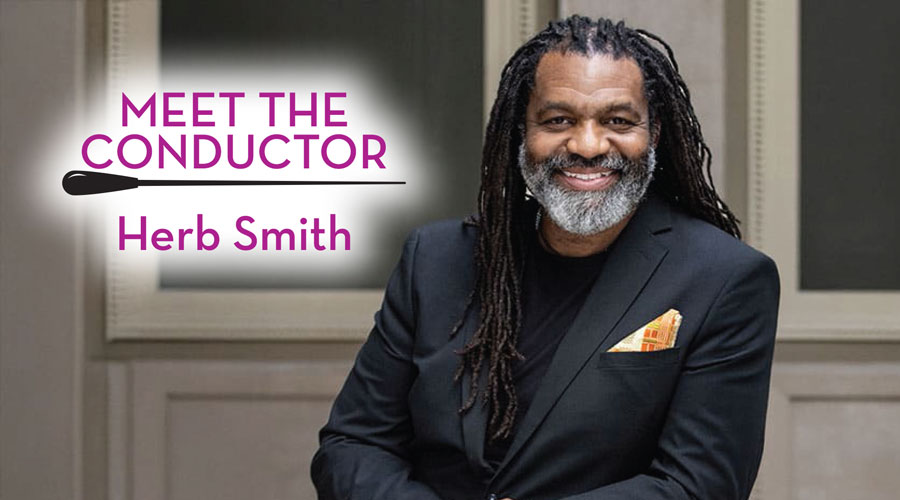
A. I was born in Cincinnati, Ohio. I went to a creative arts school and that is where the music inside of me began to grow. My parents played music through the house all the time, and we all sang in the church choir so looking back, going to a creative art school was inevitable. I left Cincinnati and was accepted into the Eastman School of Music in Rochester New York back in 1987, and I still live in Rochester today.

Q. What is your favourite era/genre of music to perform?
A. I love to perform jazz. I have always been someone that dabbled in both jazz and classical. This goes all the way back to middle school. I was in the concert band, the orchestra, and the jazz band and that continued through college at Eastman right up until now. But jazz, Funk, R&B and Pop are my favourites. My mom and dad used to listen to the Motown sound at home all the time, so I grew up with that. I’ve been in Rochester Philharmonic Orchestra as a trumpeter for over 20 years, but my main love is jazz. Plus, in jazz and popular music the trumpet has a lot more to do than in Mozart!

Q. Who are your musical influences and what do you love about their music?
A. I have an eclectic group of musical influences. As a Trumpet player, Miles Davis is number one on my list. He really defined jazz in his own unique way. He was a true innovator and today people are still copying his style. I also really like Shostakovich. His music has really good rhythm, and his orchestrations are second to none. On a more popular note, I love the music of Prince. He was another innovator in his field, and the sheer breadth of his body of work is huge. He was composing for himself, his splinter groups, the time, Vanity Six and Apollonia Six and put out hits for Chaka Kahn and Sinéad O’Connor.

Q. Your most memorable performance? Where were you and who were you performing with and why was it memorable?
A. This is a hard question because there are so many great performances that I’ve been blessed to be a part of, to name just one is difficult. But if I have to, I would say the time that I played principal Trumpet on Tchaikovsky‘s sixth Symphony for the first time with the Rochester Philharmonic Orchestra. At that time, I was second Trumpet in the orchestra and the 1st Trumpet Player was out of town. I moved up to first. The conductor was Pinkas Zuckerman. The performance went great. The first trombone at the time was George Osborne. We were so locked in for that week I will never forget that concert.
Years later after the Trombonist retired from the orchestra, he came back to visit. And he hugged me and said “We’ll always have Tchaik 6!” I didn’t know until then that this was one of his best performances as well. That exchange, when I think it about today, still moves me.

Q. How long have you been a conductor
A. I started playing the trumpet at the age of nine and I haven’t put it down yet. I am 57 years old. As far as conducting is concerned, my first time conducting an orchestra was the musical Peter Pan with my high school orchestra. The performing arts school I went to in Cincinnati did a lot of musicals. And part of what we did was to have completely student run musicals – everything from the stagehands, lighting, sound, dressers, makeup and the conductor. Being in an orchestra for as long as I have, I’ve come across a lot of different interpretations. I have become a student of conductors learning what to do and, in some cases, what not to do.

Q. Do you have a pet? If so, what are they and what is their name?
A. I am not a pet person. If it were up to me I wouldn’t have a pet, but my daughter, who is now moved out of the house, loves pets so we have had a gerbil, a rabbit and a cat.

Q. Favourite book recommendation
A. I’m in a book club, and we read a lot of different books. Recently we read James by Percival Everett. I really enjoyed it. It is the story of Huckleberry Finn from the perspective of the slave James. It really was thought-provoking. I would recommend anyone who knows the story of Huckleberry Finn to read this book.

Q. Something unique or unusual about you.
A. I am an avid Yogi. I try to go to yoga at least 3 times a week. I love it. Most times I get up and go to a 5:45AM class. After all the things that happen in a day getting up in the morning for Yoga resets my baseline back to calm.

Q. What are you most looking forward to about performing with VIS this year?
A.  This concert is going to be a whole lot of fun. Most of these holiday pieces have never been performed before or performed just a few times. New arrangements with good energy for the holidays is a clear win!

And besides the music I have never been to Vancouver Island before I have heard how beautiful it is. I can’t wait to experience it.
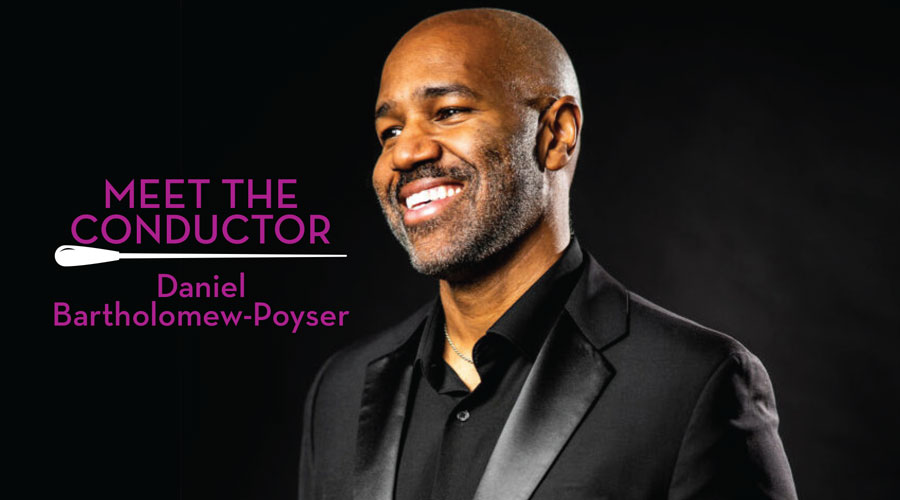
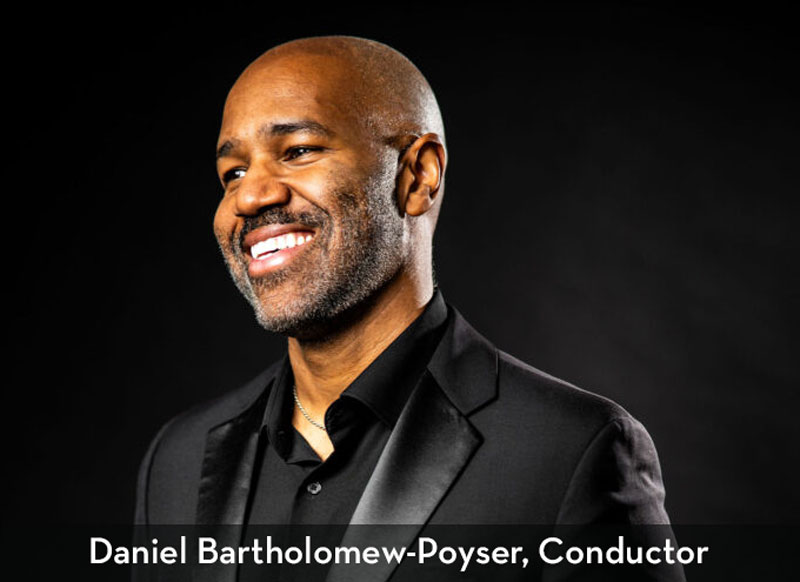
 

Meet the Conductor – Daniel Bartholomew-Poyser

Meet the Conductor – Daniel Bartholomew-Poyser

Q. What place were you born and where do you live now?
A. I was born in Montréal, grew up in Calgary, spent summers sailing around Vancouver Island on tallships as a teen and now live in Toronto.

Q. What is your favourite era/genre of music to perform?
A. As much as I love fin-de-siècle Vienna, I do really love conducting music from about 1915 to 1950. It has depth and angularity and is usually not for the faint of heart.

Q. Who are your musical influences and what do you love about their music?
A. There are many musicians I admire. I have huge respect for Paavo Järvi for his attention to details and knowledge of the score. Andrés Orozco-Estrada is a conductor I love for his fire and commitment. Valery Gergiev is, to me, a wonderful genius, who has created and built so much with so many orchestras over so many years. His style is unique; his knowledge base is phenomenal. I love watching him work.

Q. Your favourite food (only one!)
A. Florentine Lasagna

Q. Favourite book recommendation
A. The Brothers Karamazon by Fyodor Dostoyevsky

Q. Your most memorable performance? Where were you and who were you performing with and why was it memorable?
A. Probably my début with the New York Phil. I never imagined that I would get to conduct them so it was a shock and a treat.

Q. Something unique or unusual about you.
A. I love commercial aviation and have my Pilots license. (Amazing, our first two guest conductors of the season both have their pilot’s license!)

Q. How long have you been a conductor
A. I started playing instruments around age 8. I have been conducting professionally for about 15 years. .

Q. What are you most looking forward to about performing with VIS this year?
A. I am most looking forward to new relationships with the musicians and learning how they work best together. I have heard a lot about the Vancouver Island Symphony and know many conductors who have worked with the orchestra; as such, I am really excited to finally be able to meet the Orchestra in the capacity of Guest Conductor.


Host of CBC’s Centre Stage Takes the VIS Podium

Host of CBC’s Centre Stage Takes the VIS Podium

You have heard him on CBC and now you can see and hear him live on stage as the Vancouver Island Symphony proudly welcomes Daniel Bartholomew‑Poyser to the podium as Guest Conductor for Mischief, Madness & Mystery. Audiences may recognize Daniel as the host of CBC’s Centre Stage, where he brings his insight and artistry to national audiences each Saturday. A passionate communicator with an international career, Bartholomew‑Poyser brings clarity, warmth, and meaning to the concert hall, fostering deep connections between performers and listeners. His guest conducting appearances include the New York Philharmonic, Chicago Symphony Orchestra, BBC Concert Orchestra, Los Angeles Philharmonic, and the Canadian Opera Company.

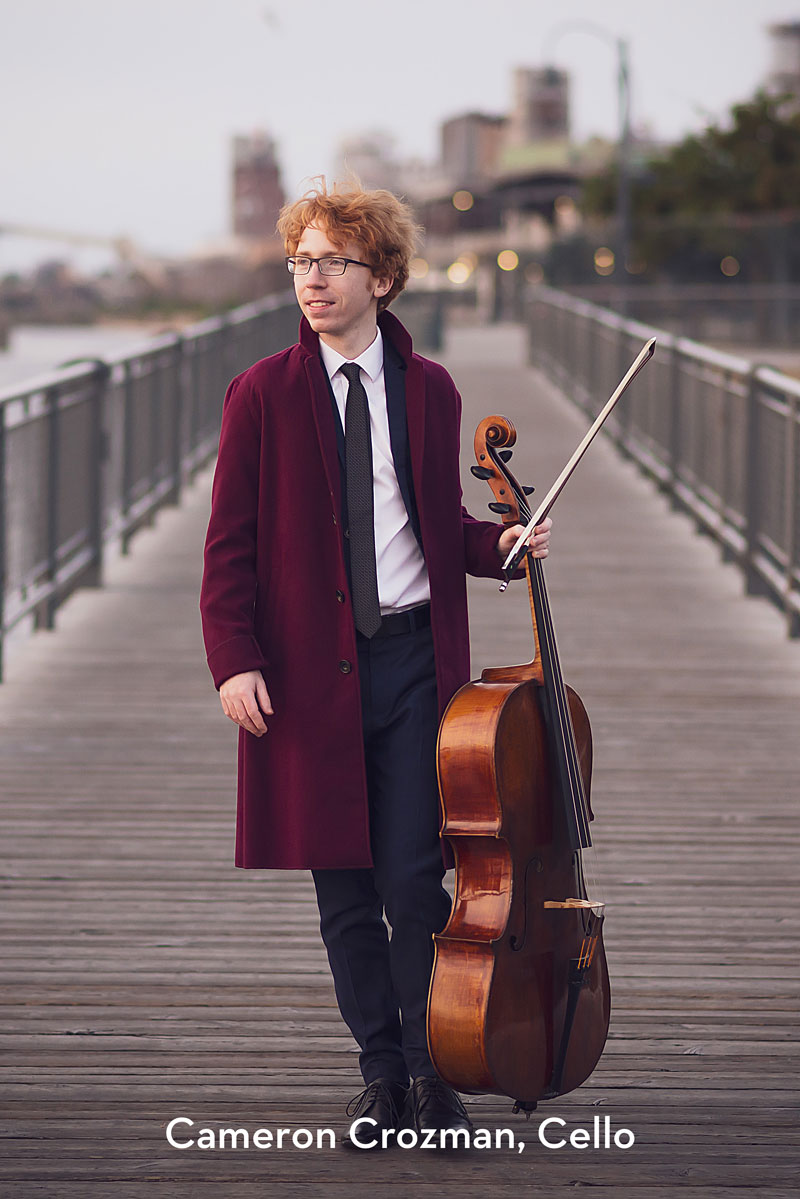
Mischief, Madness & Mystery, a program of colour, contrast, and curiosity, will feature the works of Dmitri Shostakovich, Canada’s own Jared Miller, and Edward Elgar’s masterful Cello Concerto. A marked departure in style, Elgar’s Cello Concerto reflects a more somber, introspective voice in the years following WWI. Although the 1919 premiere was met with little enthusiasm, the work steadily gained admiration over time and is now one of the most frequently performed cello concertos in the international repertoire. We are thrilled to welcome back to the stage, acclaimed Canadian cellist Cameron Crozman. When covid hit and all events were shut down – your orchestra was on stage and Cameron was the guest artist to be featured. It has taken us six years to get him back and we are delighted to feature him this weekend to perform this beloved concerto.

 Known for his expressive artistry and commanding stage presence, Crozman maintains an active performing career across Canada, the USA, and Europe. He has appeared as a soloist with the Orchestre National d’Ile‑de‑France (Paris), the Montreal, Winnipeg, Hamilton, and Vancouver Island Symphony, among others. His performances have taken him everywhere from the Philharmonie de Paris and the Shanghai Oriental Arts Centre to the Qidi Vidi Brewery of St. John’s, Newfoundland – a testament to both his versatility and adventurous artistic spirit.

Described by Classica Magazine as displaying “technical perfection with a personal style that leaves us wanting to hear more,” Crozman continues to earn international praise for his award-winning artistry. His work has been broadcast on CBC, Radio France, Radio Classique, and Medici.tv.

Cameron currently performs on a rare 1734 Domenico Montagnana cello, an instrument renowned for its extraordinary character. Generously on loan from the Canimex Collection in Quebec, it is part of one of the world’s most prestigious collections of fine string instruments. Montagnana cellos have been played by many of the world’s greatest artists, including Yo-Yo Ma, Mischa Maisky, Lynn Harrell, Truls Mørk, and Raphael Wallfisch.

Mischief, Madness & Mystery takes place on Saturday, November 14 at 7:30 pm at the Port Theatre with a pre-concert talk starting at 6:30 pm, and Sunday, November 15 at 2:00 pm at the Sid Williams Theatre in Courtenay.

Meet the Conductor – Jonathan Girard

Meet the Conductor – Jonathan Girard

Q. What place were you born and where do you live now?
A. I grew up just outside Boston, in Massachusetts — New England winters and Fenway Park baseball summers. These days home is Vancouver, a very different kind of beautiful: lots of mountains and much taller trees, Pacific Ocean instead of the Atlantic.

Q. What is your favourite era/genre of music to perform?
A. That’s a hard one — whatever I’m conducting next is always my favourite thing! But I keep coming home to the late Romantics: Strauss, Mahler, Tchaikovsky – what appeals to me is something about the emotional scale of that music, the way it holds nothing back and every phrase is so satisfying to shape in collaboration with the orchestra.

Q. Who are your musical influences and what do you love about their music?
A. Leonard Bernstein is my largest musical influence. He’s my conducting grandfather, my teacher’s teacher, but I first was mesmerized by him as a kid, watching his Young People’s Concerts on TV. Watching him conduct and then turn around and talk about music with that same brilliance and warmth, I’d never seen anyone move between those two worlds so fluently.

Q. Your favourite food (only one!)
A. Valencian paella. My friend, Spanish clarinetist Jose Franch-Ballester introduced me to the paella and we have spent many happy hours while he perfected his paella technique here in Canada. The magic is in the socarrat, the caramelized crust of rice that forms on the bottom if you have the patience to leave it alone. Like orchestra it’s a group activity and to be enjoyed directly from the pan!

Q. Favourite book recommendation
A. Berlioz’s Mémoires. It’s one of the great firsthand accounts of what it actually feels like to be consumed by music. Berlioz was eccentric, highly opinionated, and led a vivid life. Because these stories are about his musical encounters, you will find many similarities with the struggles that musicians encounter today.

Q. Your most memorable performance? Where were you and who were you performing with and why was it memorable?
A. The last time I conducted Beethoven’s 9th with the UBC Symphony and Choirs at the Chan Centre. There was something almost otherworldly about that performance. The entire symphony felt like it happened in a single breath. The orchestra played with such extraordinary beauty, and the singers sang with such power. Every person who was performing was completely unified.

Q. Something unique or unusual about you.
A. Off the podium, I’m a licensed pilot — multi-engine and instrument rated. There’s something about flying that rhymes with conducting: both demand total presence, a feel for timing, and trust in your training when things move unexpectedly.

Q. How long have you been a conductor
A. ? I’ve been a conductor since I was in 5th grade, when I got my first chance to lead the very band I played in.

Q. What are you most looking forward to about performing with VIS this year?
A. I am looking forward to coming back to working with the musicians of the VIS again. They are such fine players, among them are many friends, colleagues, and even some of my former students! I’m especially excited to hear them all play Scheherazade.

Cleared for Take Off!

Cleared for Take Off!

Conductor takes flight for Symphony’s Opening Night

Join us as we launch a ground breaking season unlike any other, featuring seven guest conductors, a new concertmaster, the addition of matinee shows, all taking flight with our opening concert, Arabian Nights. This vibrant performance takes place next Saturday, October 17 at The Port Theatre, showcasing a dynamic program that promises to captivate audiences and set the tone for an exciting musical season ahead.

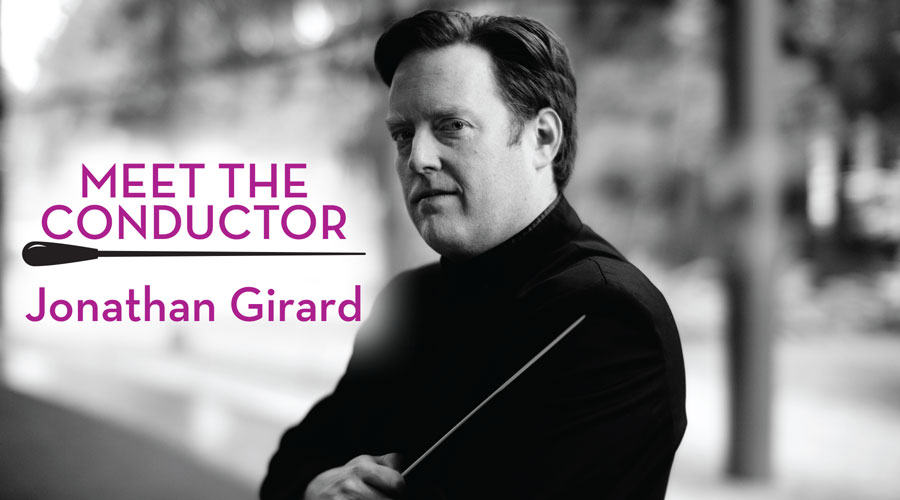
Leading the performance is Maestro Jonathan Girard, the first guest conductor on the VIS season. Currently serving as the Director of Orchestras at the University of British Columbia, Girard is known for his generous musicianship and boundless enthusiasm on the podium. He also conducts the Athens Philharmonic, (Greece) and the Tokyo Opera Studio, (Japan). This marks his second appearance with the VIS, and he is excited to return to open the season. In a delightful twist, Girard, an avid commercial aviation enthusiast and pilot, plans to fly himself to Nanaimo for the performance!

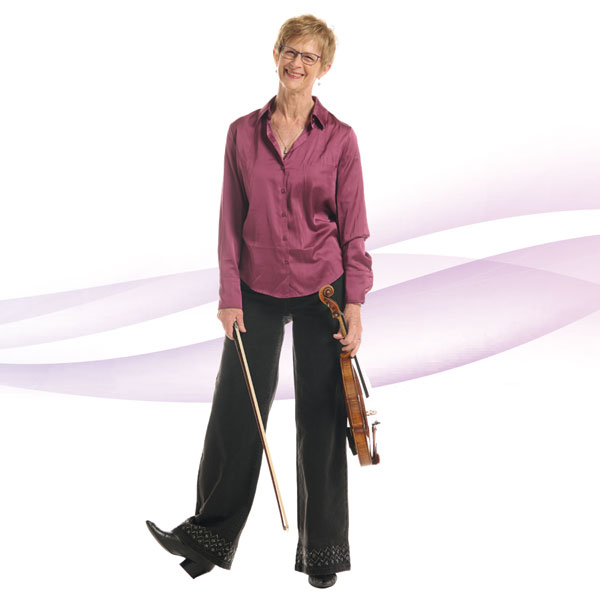
We are so thrilled this performance will also feature our new Concertmaster, Joan Blackman, whose exceptional talent will help convey the enchanting narratives woven throughout the program.
Highlighting both Canadian talent and classical masterpieces, this concert is not only a celebration of music – it is a celebration of our community and the stories that unite us.

The programme will burst to life with Alexina Louie’s Music for a Celebration — a vibrant, rhythmic spark that sets the tone for the season ahead. Brahms’ Variations on a Theme by Haydn follows – a masterclass in imagination and craft, transforming a single theme into a sweeping musical journey. The concert culminates in Rimsky Korsakov’s beloved Scheherazade, inspired by the timeless tales of One Thousand and One Nights.

Though each of these composers represent different eras and styles in classical music, there are interesting correlations among them.

Cultural Influence: All three composers were influenced by their cultural contexts. Alexina Louie draws on her Canadian heritage and Eastern influences, which is evident in her vibrant and rhythmic compositions. Brahms, rooted in the Romantic tradition, often incorporated folk elements and classical forms, while Rimsky-Korsakov’s work is steeped in Russian nationalism and folk tales

Romantic Tradition: Brahms and Rimsky-Korsakov are both significant figures in the Romantic era, though they approached composition differently. Brahms is known for his structural rigor and emotional depth, while Rimsky-Korsakov is celebrated for his orchestral color and vivid storytelling. Louie, while contemporary, is influenced by the Romantic tradition in her expressive style, creating a bridge between past and present.

Orchestration and Innovation: All three composers are notable for their innovative orchestration. Brahms’ Variations on a Theme by Haydn showcases his mastery of orchestral writing, transforming a simple theme into a complex tapestry of sound. Rimsky-Korsakov’s Scheherazade is a prime example of his brilliant use of orchestral color, bringing the tales of One Thousand and One Nights to life. Louie’s work demonstrates a modern approach to orchestration, incorporating diverse musical elements and textures.

While there is no direct personal relationship among these composers due to the differences in their lifetimes – Brahms (1833-1897), Rimsky-Korsakov (1844-1908), and Louie (born 1949) – their works can be seen as part of a broader dialogue within classical music, reflecting the evolution of styles, themes, and cultural influences across generations.

Arabian Nights takes place on Saturday, October 17th at 7:30 pm at the Port Theatre with a pre-concert talk starting at 6:30 pm.